Peru’s economy is an emerging mixed economy characterized by sustained foreign trade growth and an upper-middle-income status according to the World Bank classification. It ranks 47th among the world’s largest economies by total GDP and continues to show steady improvement in its Human Development Index. Peru was one of the fastest-growing economies in the world between 2005 and 2019, with an average GDP growth rate of 6.3%.
The Peruvian economy is strongly driven by exports of natural resources from its three natural regions and the Pacific Ocean. In Latin America, Peru ranks 13th in productive agricultural land areas. Traditionally, the country’s main employment-generating sectors have been the following:
Agricultural Exports: Blueberries, table grapes, asparagus, avocados, ginger, cocoa, bananas, mandarins, mangoes, quinoa, coffee, cocoa beans, onions, tea, paprika peppers, cherries, and strawberries. Peru also produces a wide range of nationally important crops such as rice, beans, chickpeas, corn, lentils, peas, wheat, cotton, potatoes, broccoli, asparagus, and many other vegetables.
For decades, agricultural activities have been supported by highly trained professionals from 10 public universities and 187 agricultural institutes. During the same period, agricultural mechanization has gradually advanced to an intermediate level, where the use of 175–200 HP tractors and harvesters is now common in the field.For more details, click here.
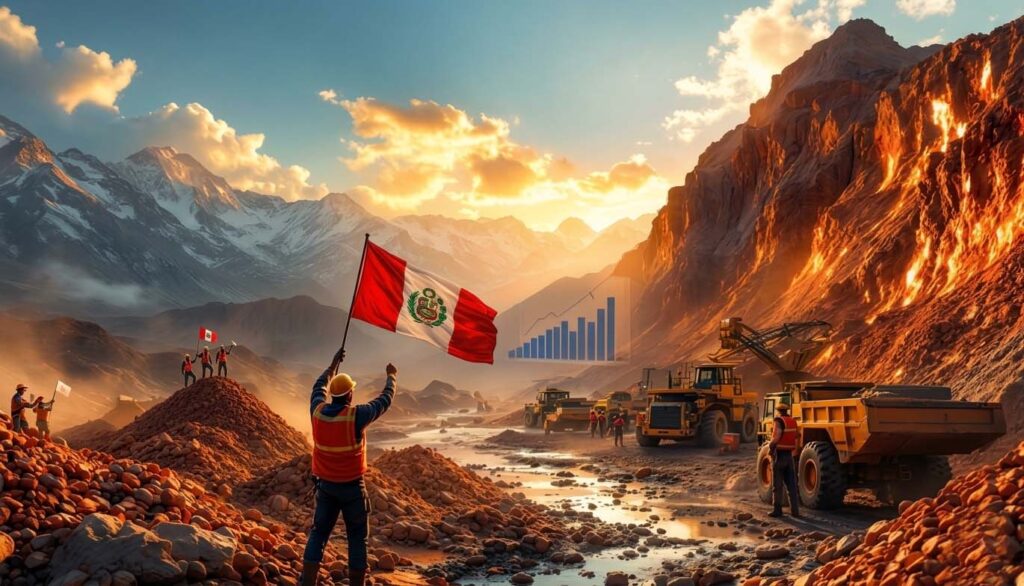
Mining: Mining is a key pillar of the Peruvian economy, representing nearly 10% of GDP and 60% of exports. Peru is the world’s second-largest producer of copper, zinc, and silver, and is also an important producer of gold and lithium. The industry, mainly concentrated in the Andes, attracts significant foreign investment and generates employment, although it also faces social and environmental challenges.
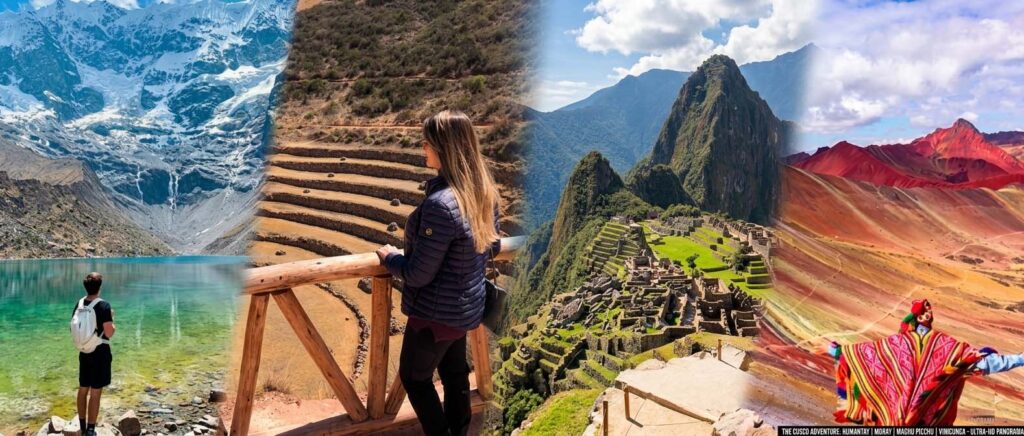
Tourism: Peru’s main tourist attractions include Machu Picchu, the city of Cusco, and the Sacred Valley. Other popular destinations are Lima (the former viceregal capital), the Nazca Lines, the Paracas National Reserve, Arequipa, and the Colca Canyon. Travelers also visit Lake Titicaca, the Peruvian Amazon, and the coastal oasis of Huacachina.
As a result of this economic development, Peru has signed several free trade agreements with the United States in 2006, Canada in 2009, Japan in 2011, and the European Union in 2012. These agreements are similar in structure to the North American Free Trade Agreement (NAFTA/CUSMA), signed by Canada, Mexico, and the United States in 1994.
Most industrial and commercial activities are concentrated in Lima, while mining and agricultural exports have driven development across the country’s inland provinces.
For more information about Peru’s economy – Click here